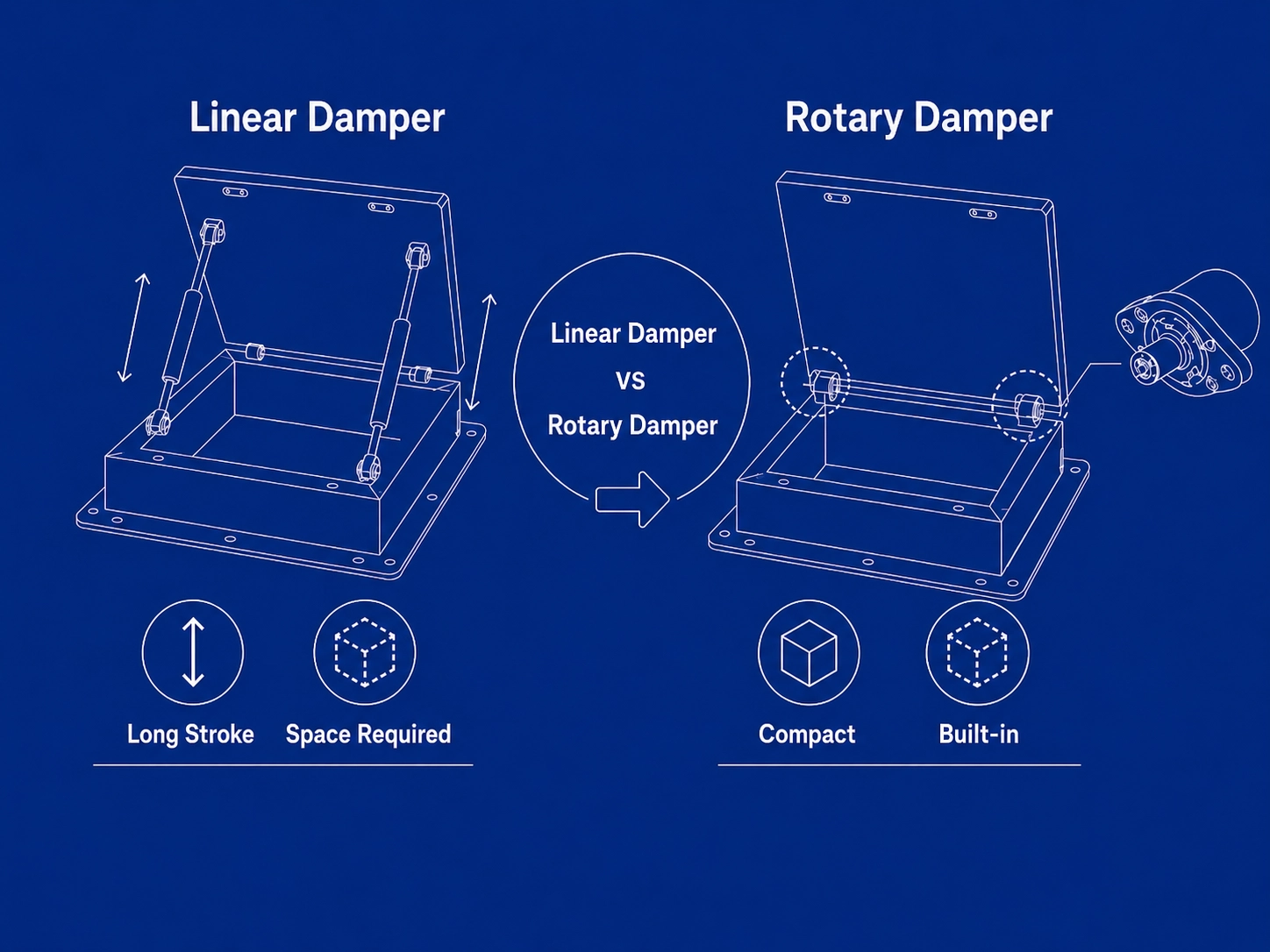
In products that use linear dampers for opening/closing mechanisms or moving parts, motion control is relatively easy to achieve. However, design constraints can sometimes pose challenges.
For example, the need for mounting space to be equal to the stroke length can affect product size. Additionally, using two linear dampers (one on each side) may increase the number of required brackets and components. Because the fulcrum and point of action must be connected, layout flexibility is also limited, which can lead to interference with surrounding components or impact the product’s overall appearance.
In these applications, switching to a rotary damper—which controls opening and closing via a “rotary axis”—can help create a more compact structure while providing greater design flexibility.
In this article, we will explore common challenges associated with linear dampers and demonstrate how rotary dampers can help solve these issues through application-based examples and illustrations.
Contents
Features of rotary dampers compared to linear dampers
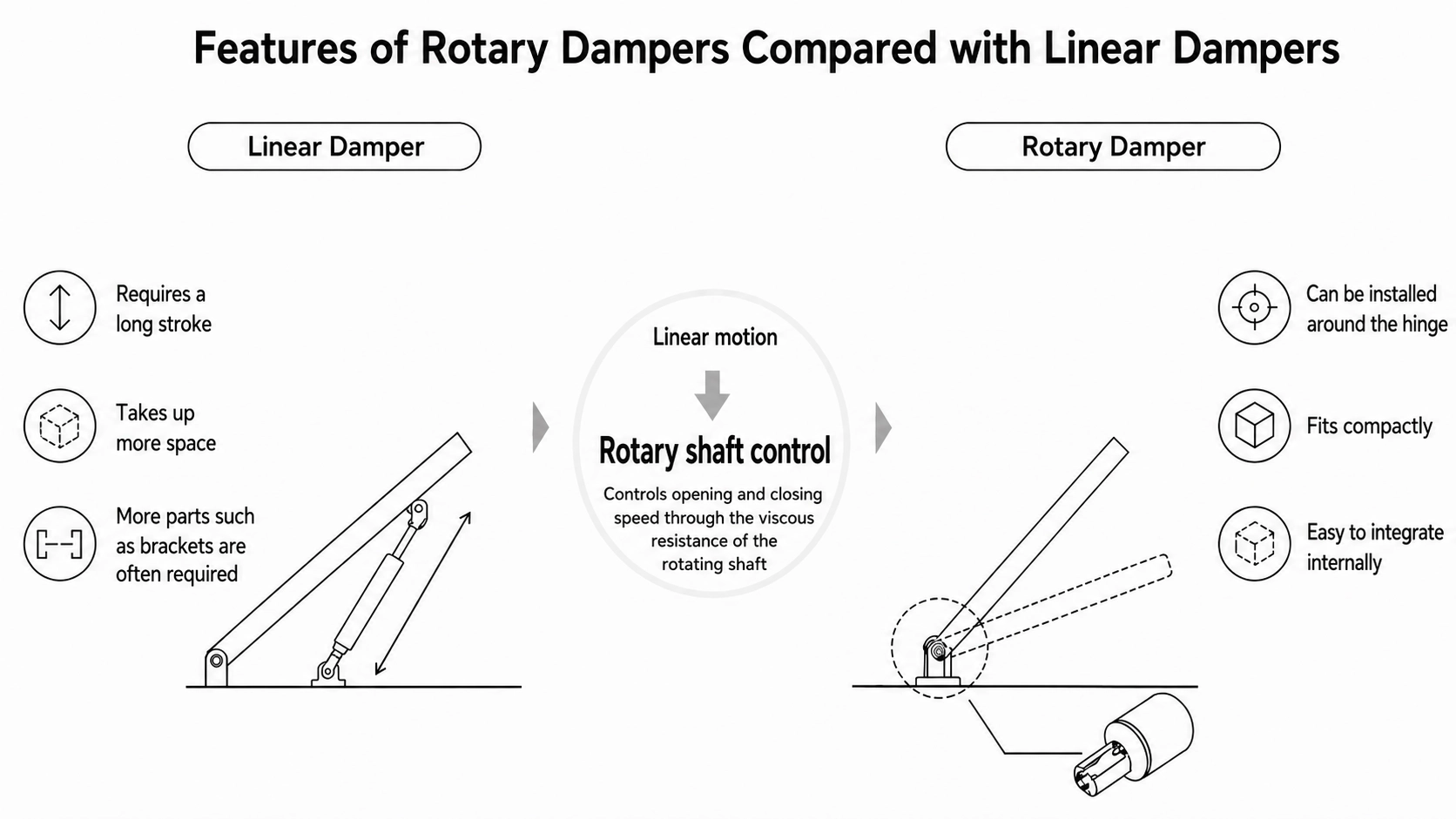
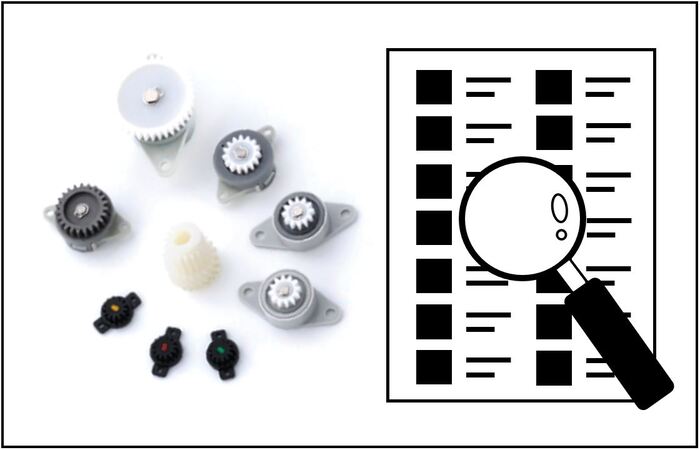
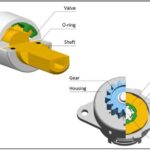
A rotary damper is a type of damper that controls opening and closing speeds by utilizing the viscous resistance of oil generated around a rotational axis, rather than relying on linear motion.
Unlike linear dampers, rotary dampers do not require a stroke mechanism and can be installed directly around a pivot point, such as a hinge. This allows them to be easily integrated into confined spaces, while contributing to a more compact overall design. Furthermore, positioning them near the pivot point helps avoid interference with surrounding components, leading to greater flexibility in product layout. Since rotary dampers can be integrated into the product’s interior, it allows designers to maintain a clean exterior appearance without exposing the damper.
In particular, for products where both exterior design and functionality must be balanced—such as furniture, residential fixtures, and vehicle interiors—the ability to easily separate design and function is a major advantage of rotary dampers.
Design improvements expected from replacing linear dampers
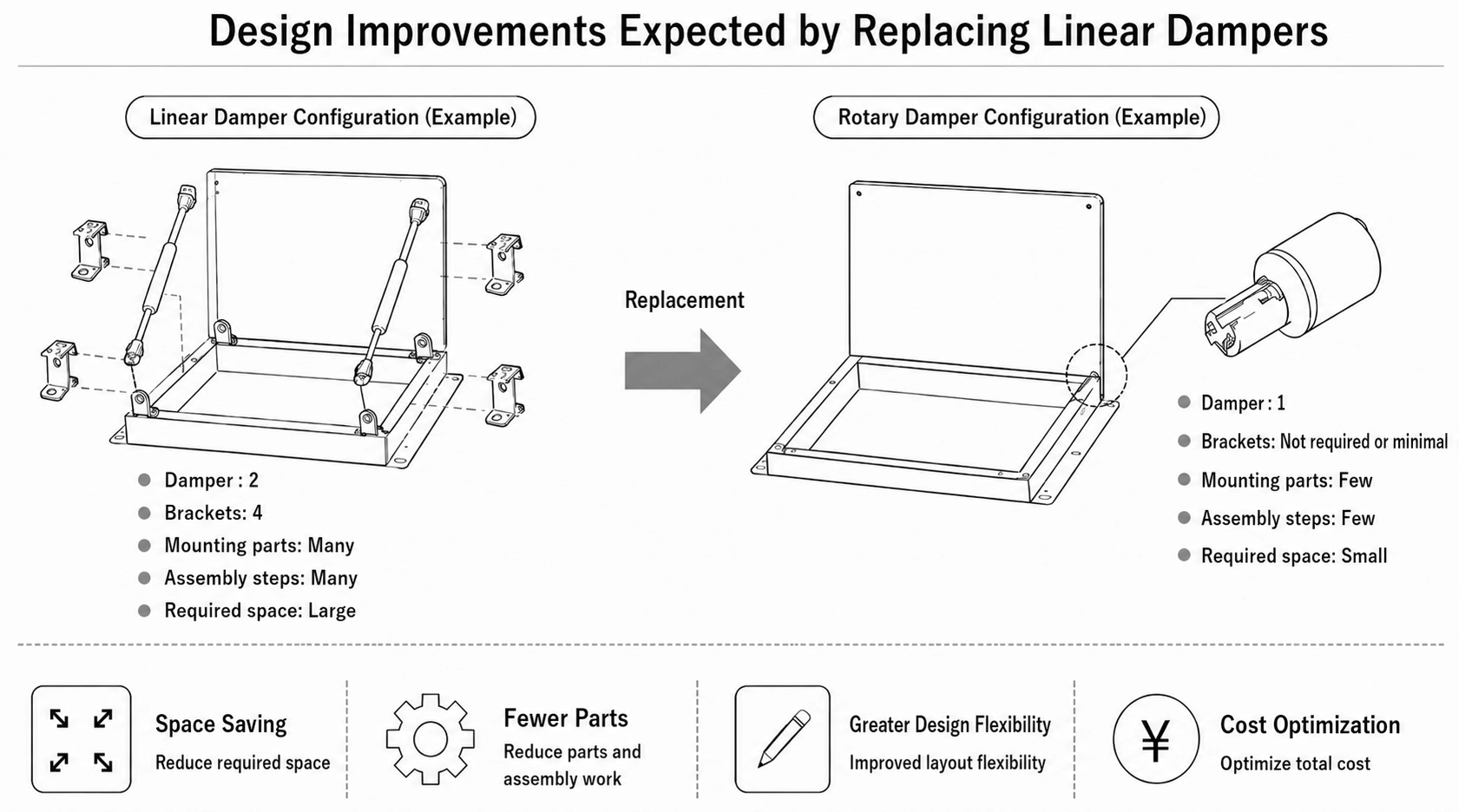
Switching from linear dampers to rotary dampers can provide greater flexibility in structural design.
For example, even in structures that previously required two dampers—one on each side—it may be possible to achieve equivalent opening and closing control with a single rotary damper mounted at the hinge, depending on the required torque specifications. This can reduce the number of brackets and mounting parts, while also simplifying assembly.
Additionally, because rotary dampers require less space for opening and closing mechanisms, they can help create more compact product designs and improve internal layout flexibility. By positioning the damper internally, it becomes easier to incorporate opening and closing functions without compromising the exterior appearance.
As a result, the following improvements can be expected:
- Space savings
- Reduction in the number of parts
- Greater design flexibility
- Cost optimization
However, a rotary damper alone cannot replace the “lifting function” provided by gas springs. Therefore, this approach is best suited for applications where the primary objective is controlling opening and closing speeds rather than providing lifting assistance.
Illustrations of replacing linear dampers with rotary dampers
Rotary dampers have the potential to improve structural design and save space in a variety of opening and closing applications.
Below, we provide illustrations showing how they are installed in typical applications.
■Bakery Shelves
In bakery shelves used as store fixtures, linear dampers are sometimes used to control the opening and closing movement of covers. However, because they require space along the sides, they can limit product design and restrict internal layout flexibility. By incorporating a rotary damper around the rotation axis, it is possible to control the opening and closing speeds while maintaining a compact structure. Another key advantage is that the damper can be positioned internally, making it easier to achieve a clean, refined product design.
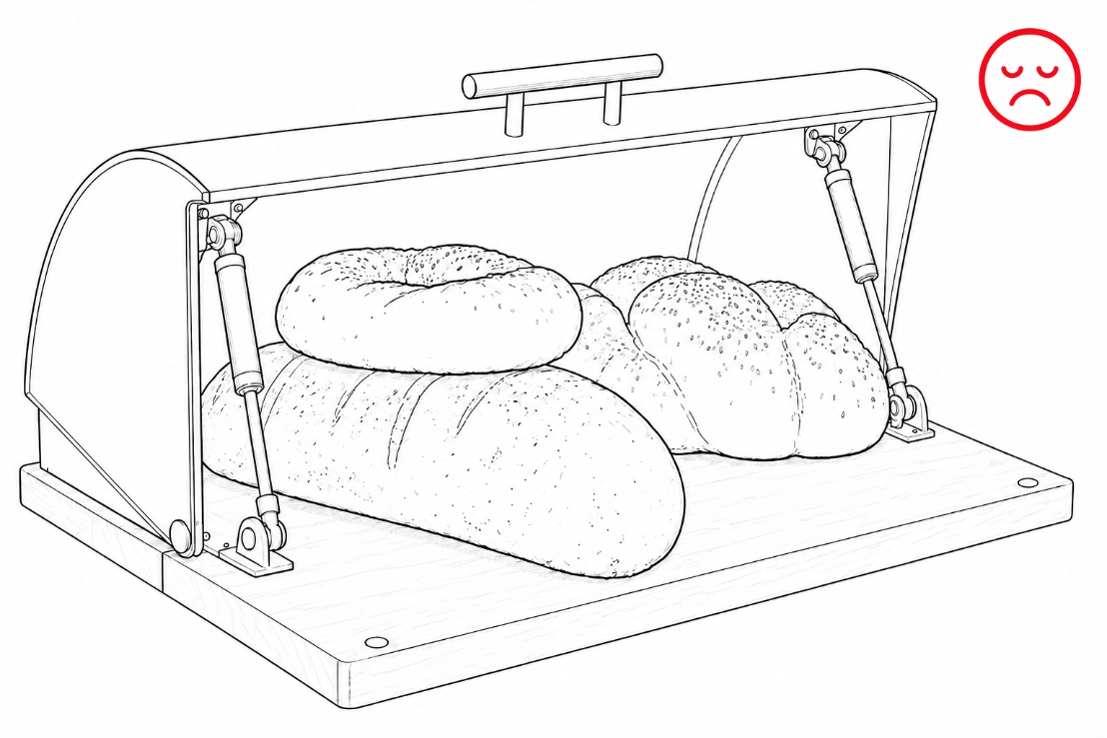
Linear damper
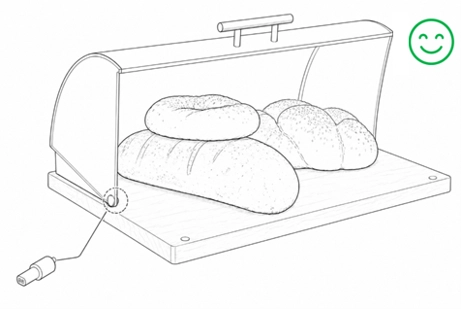
Rotary damper
■ Pickup Truck Tailgates
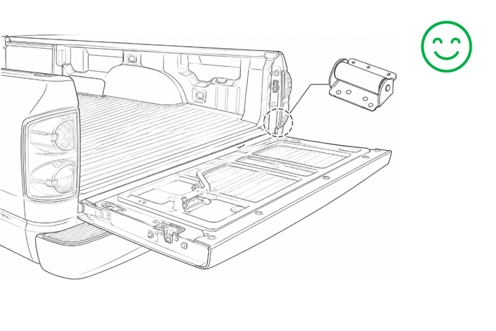
Shock absorbers are sometimes used in pickup truck tailgates and console boxes to dampen the impact when opening and closing them. However, mechanisms installed on both sides can increase space requirements and add complexity through additional parts. By integrating a rotary damper into the hinge, opening and closing speed can be controlled through the rotation axis, allowing for a simpler and more compact structure. In some cases, this also provides greater flexibility in component placement and improves overall layout efficiency.
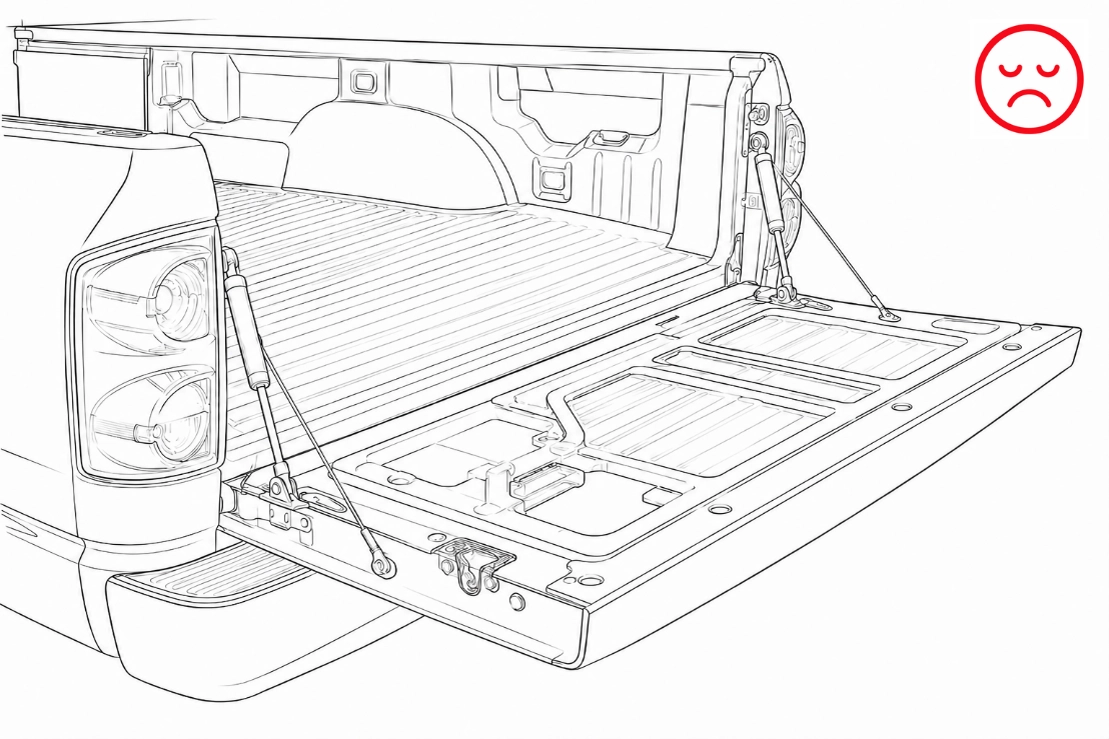
Linear damper
Rotary damper
■Wall Cabinets
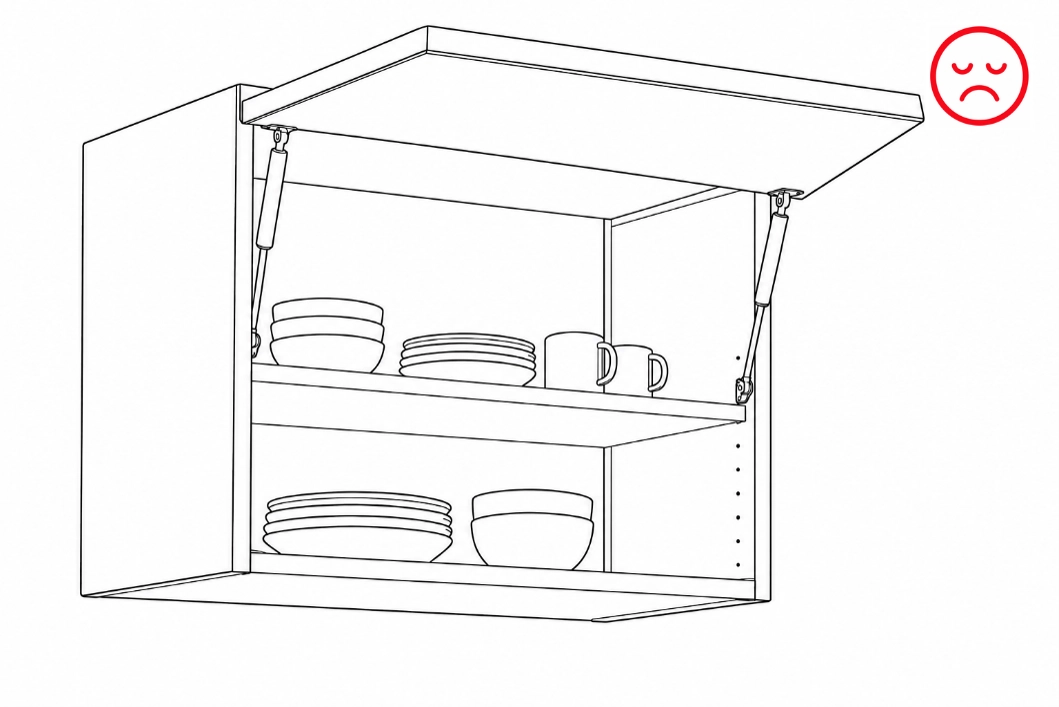
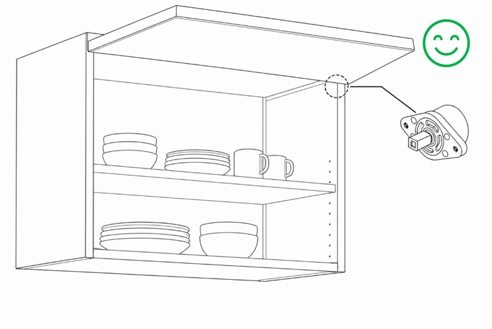
Because linear dampers occupy space inside the cabinet, they can reduce available storage capacity and limit internal layout flexibility. Additionally, exposed hardware and dampers can sometimes affect the overall appearance when the cabinet door is open.
By incorporating rotary dampers into the hinge area or around the pivot axis, it is possible to control the opening and closing speed while simplifying the side mechanisms. Since rotary dampers can be positioned inside the cabinet, they preserve storage space and minimize the visibility of mechanical components, making it easier to achieve a balance between aesthetics and functionality.
Linear damper
Rotary damper
■Range Hood Covers
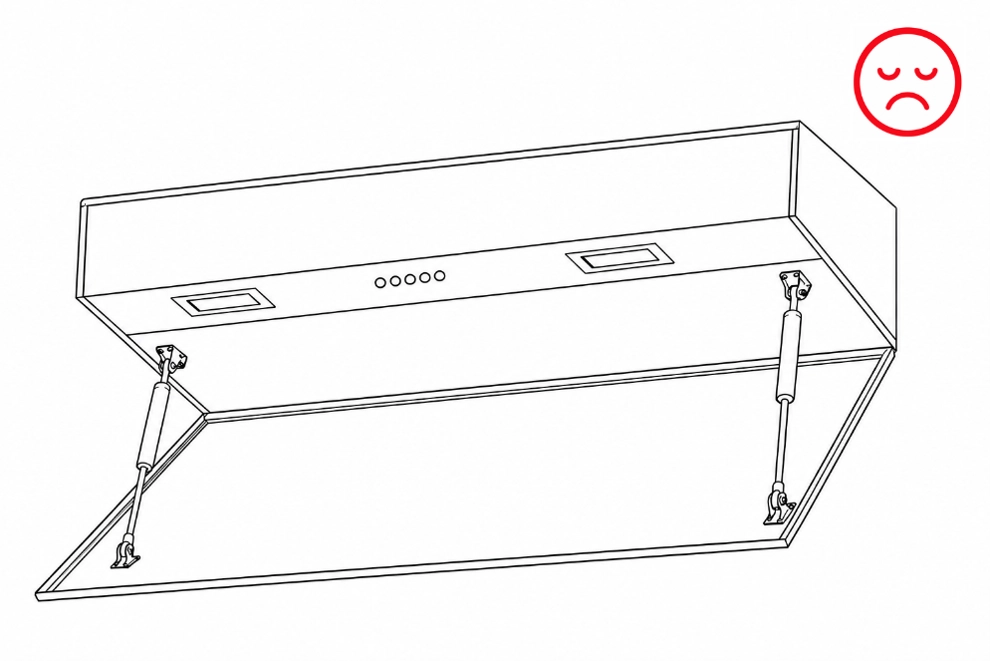
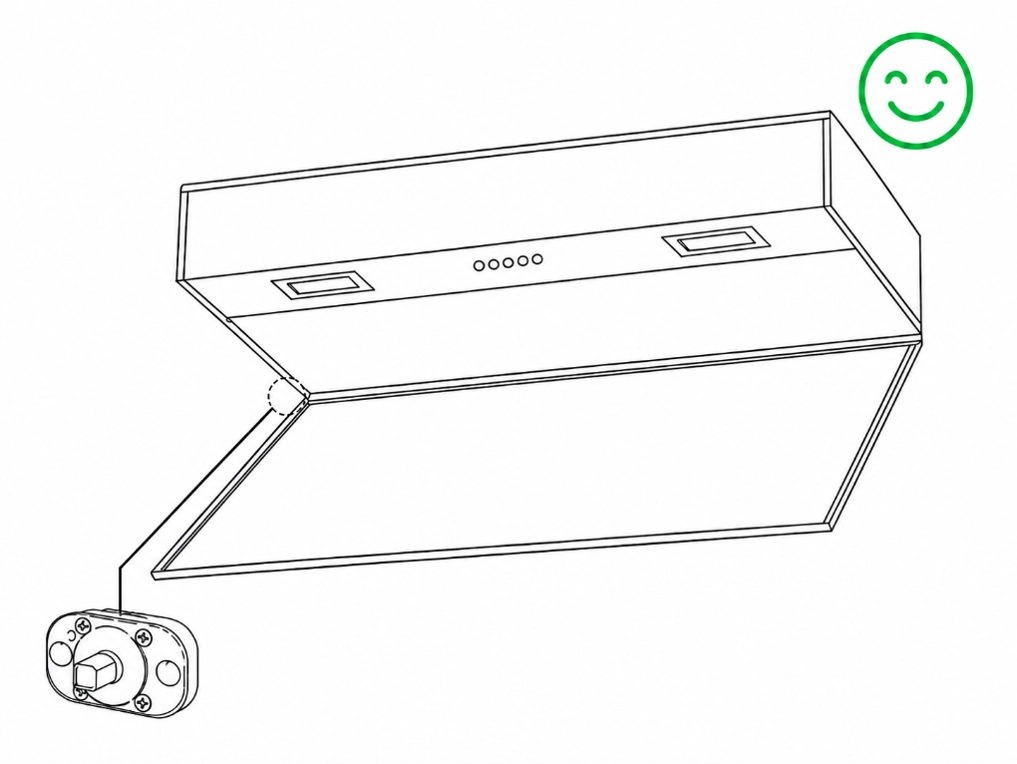
Linear dampers are sometimes used in range hood covers to assist with opening and closing during filter replacement and maintenance. However, because the damper must be installed within a limited internal space, the structure can become complex, and may interfere with surrounding components, potentially forming new challenges.
By incorporating a rotary damper into the cover’s rotation axis, it is possible to achieve a compact design while still controlling the opening and closing speed. Since the damper can be easily positioned out of sight from the outside, smooth opening and closing operations can be achieved without compromising the range hood’s exterior design. In some cases, this also helps reduce the number of parts required and allows for greater layout flexibility.
Linear damper
Rotary damper
■Roof Hatch
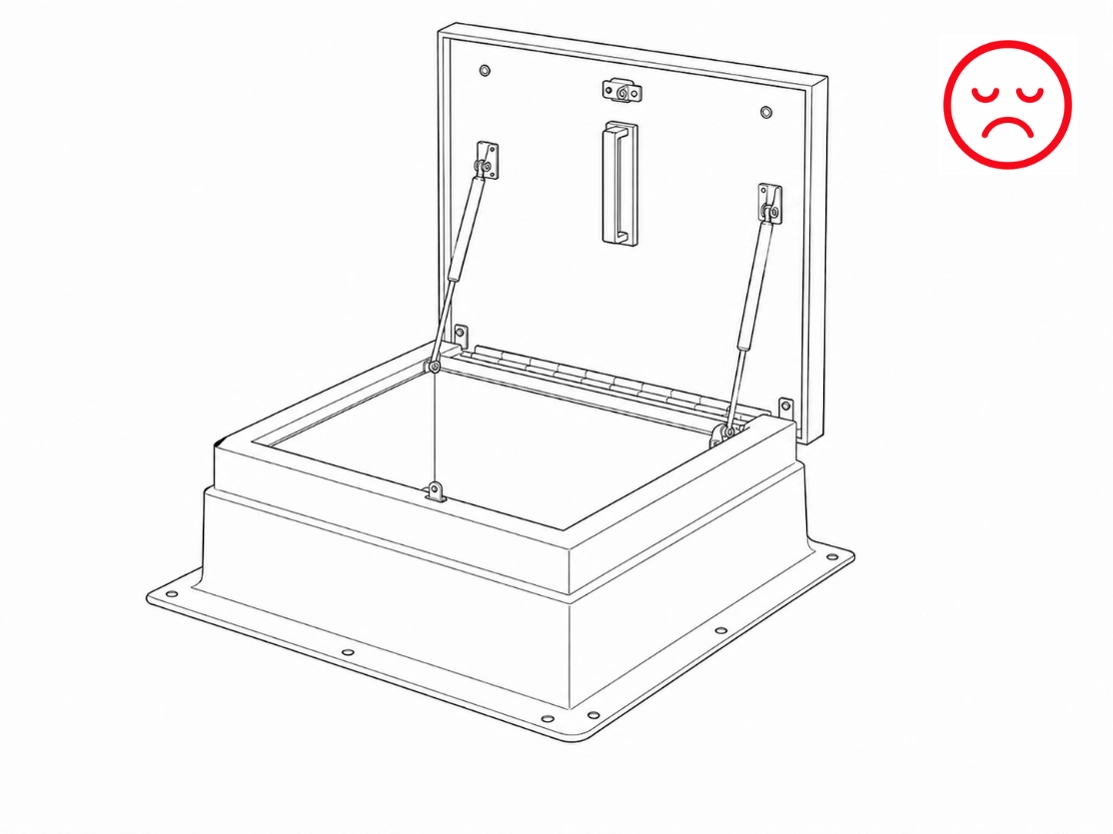
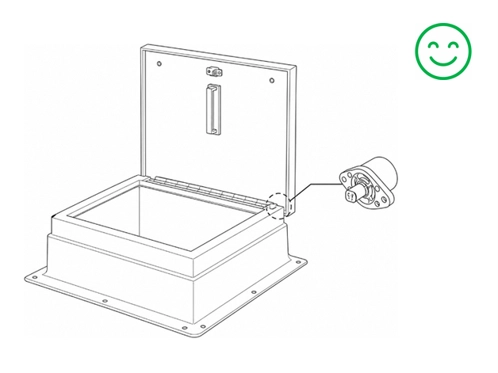
Shock absorbers are sometimes used in roof hatches to prevent the lid from closing too quickly. By incorporating a rotary damper into the hinge assembly, it is possible to control the opening and closing speed while maintaining a compact design. Since the functionality is concentrated near the center of rotation, surrounding space can be utilized more effectively resulting in improved maintainability and layout flexibility.
Linear damper
Rotary damper
Summary of How Rotary Dampers Solve Linear Damper Challenges in Space-Saving Design
Linear dampers are widely used as effective solutions for controlling opening and closing movements. However, depending on the application, they may present design challenges relating to installation space, the number of components, and exterior appearance.
In such cases, replacing linear dampers with a rotary damper—which controls motion through a rotating shaft—can provide the following benefits:
- Space savings
- Reduction in the number of components
- Greater design flexibility
- Improved appearance
and other advantages.
However, since a rotary damper alone cannot replace the lifting function provided by a gas spring, it is important to select the appropriate mechanism based on the application conditions and required functions.
At TOK, we provide rotary damper solutions tailored to your specific requirements and opening/closing conditions.
Please feel free to contact us to discuss your current linear damper configuration and explore potential replacement options.
フォームが表示されるまでしばらくお待ち下さい。
恐れ入りますが、しばらくお待ちいただいてもフォームが表示されない場合は、こちらまでお問い合わせください。